


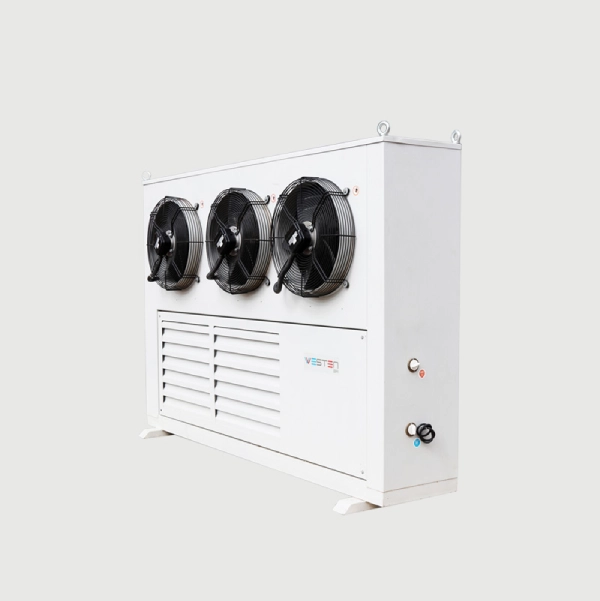
The compression chiller is the main component of a building’s cooling system, responsible for cooling water in HVAC systems or industrial processes. Compression chillers are available in air-cooled and water-cooled designs. In a water-cooled chiller, the refrigerant is cooled by water through a cooling tower. This system is generally not used in humid climates, and it operates based on the evaporative compression cycle.
The necessary components for this system, which ultimately produces chilled water, include the water-cooled chiller, cooling tower, pumps, and associated piping. The operation of a water-cooled compression chiller is as follows:
- Warm water entering the chiller goes into the evaporator section.
- In the evaporator, copper tubes containing the refrigerant absorb the heat from the water, cooling it down before it is sent to the air handling units or fan coils.
- The refrigerant, now heated and turned into gas, moves to the compressor.
- From the compressor, the refrigerant gas goes to the water-cooled condenser where its temperature is reduced and it turns back into a liquid.
- Finally, the liquid refrigerant passes through an expansion valve and returns to the evaporator, while the heated water from the condenser is transferred to the cooling tower where its temperature is reduced.
- The water-cooled compression chiller can also be installed in indoor spaces; however, the cooling tower section must be installed outdoors.
- Water-cooled chillers have higher efficiency and coefficient of performance compared to air-cooled chillers. As a result, they have a lower nominal cooling capacity and smaller dimensions.
- The maintenance cost of these chillers is higher compared to air-cooled types.


